
Democracy to Consumerism

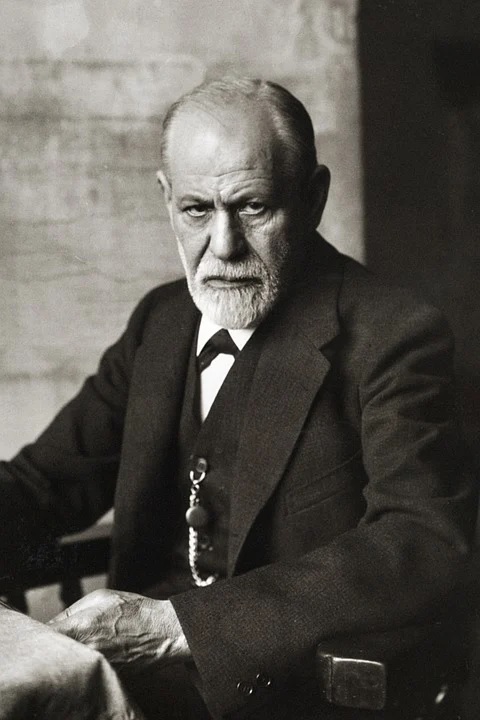
Sigmund Freud

A brilliant British documentary about capitalism is The Century of the Self by filmmaker Adam Curtis. It is about the twentieth century conflation of three concepts: the positive attributes of democracy; the less positive attributes of capitalism; and the zero positive attributes of consumerism.

Democracy has become synonymous with consumerism, and it has become our constitutional right to get more stuff whenever we want to get more stuff. Throughout the four-part miniseries, which covers 100 years of psychologically deceptive marketing, it is difficult to avoid feeling used, abused and manipulated as the work of Edward Bernays (nephew of Sigmund Freud and self-proclaimed originator of “public relations”) is reviewed and analyzed (Curtis 2002).

Using psychotherapy techniques, Bernays’ marketing campaigns conflated democracy with the desire to acquire. Purposefully stroking egos and playing upon feelings of entitlement, he positioned wanting as more important than needing. Over the past century, democracy has been transformed from a concept promoting freedom of choice and self-determination into a self-centered competition for winning approval through the accumulation of assets.

Neoliberal capitalism is based on financial accountability. Governments and businesses attempt to follow a strict code of austerity, restraint, privatization, cutbacks and balanced budgets. This would be fine except that cuts typically affect lower/middle class jobs and happen on the front line where service provider support is most valued and most needed (i.e. teachers, administrators, laborers, etc.). Restraint is focused on returning shareholder value, and rarely addresses excessive management salaries or bloated bureaucratic infrastructures. The Market (as God) rewards the rich and commodifies everything else.

Democracy was conflated with consumerism through the aggressive promotion of capitalism, specifically neoliberal capitalism, now a well-established principle found at all levels of society and government (Rx Music 2020).

Wealth Inequity

Neoliberal capitalist governments tend to support concepts such as trickle-down economics providing tax breaks for corporations and the wealthy. The expectation is that tax savings will flow through to new investment and the creation of more and better middle-class jobs. It has been a proven failure countless times, from the 1890s horse-and-sparrow theory through to 1980s Reagonomics, yet, almost comically, the same programs are reintroduced time and time again.

The horse and sparrow theory suggests that if the horse is fed enough oats, some of it will pass through the horse’s digestive tract and be excreted on the road, where the sparrows will find enough to satisfy their own modest needs. Although a somewhat graphic analogy, it sums up the root problem of wealth inequity in today’s society.

The latest installment of trickle-down economics, Trumponomics, resulted in record government deficits and, corporately, a dispersal of quantitative-easing funds (tax credits totaling over one trillion dollars) that did nothing to stimulate the economy. Unfortunately, corporate windfall tax savings tend to be used for non-systemic economic programs, such as share-buybacks (benefitting only the shareholders) and employee reduction buyouts (again, benefitting only the shareholders).

The autumn 2018 announcements of GM staff reductions (over 25,000) and plant closures (five: Oshawa, ON; Detroit, MI; Warren, OH; White Marsh, MD; Warren, MI) were a direct result of the cash flow made available through trickle-down tax savings. Ironically, the GM taxbreak of over $500 million was intended to stimulate growth and employment in local manufacturing.

As the wealth-inequity ratio of rich-to-poor declines (i.e. what used to be the top 10% moved quickly through the top 1% and is now closing in on the top 0.1%), it is becoming obvious that the extra cash flow held by corporations and wealthy individuals is not invested in new business opportunities.

And perhaps a sign of our generally weakened social conscience, the rise in extreme poverty rates is a key indicator for the lack of empathy and philanthropy found in today’s nouveau riche.

Government hand-outs to the rich end up in the stock market where the shareholder is king and an increasingly small number of exceedingly wealthy individuals benefit from the closed system of mutual self-serving intent (Rx Music 2020).