
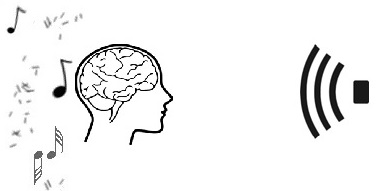
Neurologic Music Therapy (NMT) complements standard music therapy with a focus on neuropathway connections that respond specifically to music and rhythm. Michael Thaut in his book Handbook of Neurologic Music Therapy suggests that NMT is beneficial for individuals suffering from stroke, traumatic brain injury, Parkinson’s and Huntington’s disease, cerebral palsy, Alzheimer’s disease, autism, and other neurological diseases affecting cognition, movement, and communication (e.g., MS, Muscular Dystrophy, etc.) (Thaut 2016).
Dr. Thaut is a professor at the Faculty of Music at the University of Toronto and past Director of the Music and Health Research Collaboratory. He considers music to be a complex auditory language with a structure in time and patterns that can have a profound effect on sensory perception in the human brain.
He was featured on a 2016 CBC Radio interview where he stated, “The sensory input of music generates the signal that people cannot generate internally themselves. Auditory neurons start clicking because they hear a click sound, and the auditory neurons are connected to the motor neurons, and the motor neurons sit there quietly, and as soon as the auditory neurons start shooting, that electrochemical impulse triggers the motor neurons, you have that entrainment” (CBC Radio 2016).
Regarding brain connectivity and neuroplasticity, Thaut provides an example of a stroke patient losing functionality on the left side of the brain, the side typically associated with speech. Through extensive therapy training, the patient can transfer the function of speech to the right side of the brain (Thaut 2015). He goes on to say that by using music or click tracks in music therapy, Parkinson’s patients can experience improvement in gait and are able to regain rhythmicity, that is, the capacity to walk again smoothly and evenly. By introducing a steady rhythm in another part of the brain, the neurological connectivity provides a bridge to motor capability.
During the interview, Professor Thaut was asked, “Is there a class of neurological disorders that music is particularly good at addressing?” His response was enthusiastic. “Pretty much the whole range of cognitive, speech, and movement disorders that have a known neurological basis respond very, very well” (CBC Radio 2016).
During a lecture titled “How Music Helps to Heal the Injured Brain” at the University of Toronto on March 31, 2019, keynote speaker Dr. Thaut stated that “the clinical neuroscience of music perception is the foundation for music in brain rehabilitation.” He spoke of the comprehensive and all-encompassing nature in which our brains process music and stimulate the creation of memories. The simple act of listening to a popular song will initiate the entrainment of auditory neurons to motor neurons helping bridge auditory cues (typically found on the right side of the brain) to word and lyric sequencing (typically found on the left side of the brain) thereby stimulating memory and movement engagement, which in turn creates an emotional and physical response ultimately setting the stage for the development of even more memories. The reward of dopamine encourages similar future activity. Neurologic music therapy uses music-based interventions (MBI) to take advantage of the broad connectivity of music in the brain. Some of the techniques used include rhythmic auditory stimulation (RAS), musical speech stimulation (MSS), and melodic intonation therapy (MIT).
The finale of the aforementioned lecture featured an onstage presentation of MSS in action. Dr. Corene Hurt introduced Jonas Vaskas, a successful Toronto-based opera baritone that had suffered a severe stroke five years earlier leaving him semi-paralyzed and without the ability to communicate. Dr. Hurt described his path over the past few years. It was discovered early on that although he had lost his professional singing voice, he was able to engage at a basic level using songs familiar to him.
Musical Speech Stimulation is the use of musical materials such as songs, rhymes, chants, and musical phrases simulating prosodic speech gestures to stimulate non-propositional speech. This technique uses the completion or initiation of over learned familiar song lyrics, association of words with familiar tunes, or musical phrases to elicit functional speech responses (Basso et al. 1979). For example, spontaneous completion of familiar sentences is stimulated through familiar tunes or obvious melodic phrases (e.g., “You are my …………”, or “How are you ………?”) (Thaut 2016).
Dr. Hurt engaged Jonas on stage in a one-on-one demonstration of singing together, imitation, and call-and response techniques. The stuttering, or delayed response, in Jonas’ speaking voice virtually disappeared with the introduction of musical rhythm (rhythmicity and entrainment). The lecture ended with Jonas singing his version of Elvis’ “Can’t Help Falling in Love with You” followed by thunderous applause. It was an emotional presentation.
Neurologic music therapy promotes music-based interventions for health because of music’s general acceptance in society and its often simple implementation. “When music flourishes, people flourish too. People love music, and they love musicking together. It is not difficult to understand why. This is how music helps” (Ansdell 2015:305). It is a non-invasive, non-chemical, community-based, and artistically-driven medical remedy (Rx Music 2020).
 Keith Loach